Full Menu / Blog / Is Tim Hortons Halal
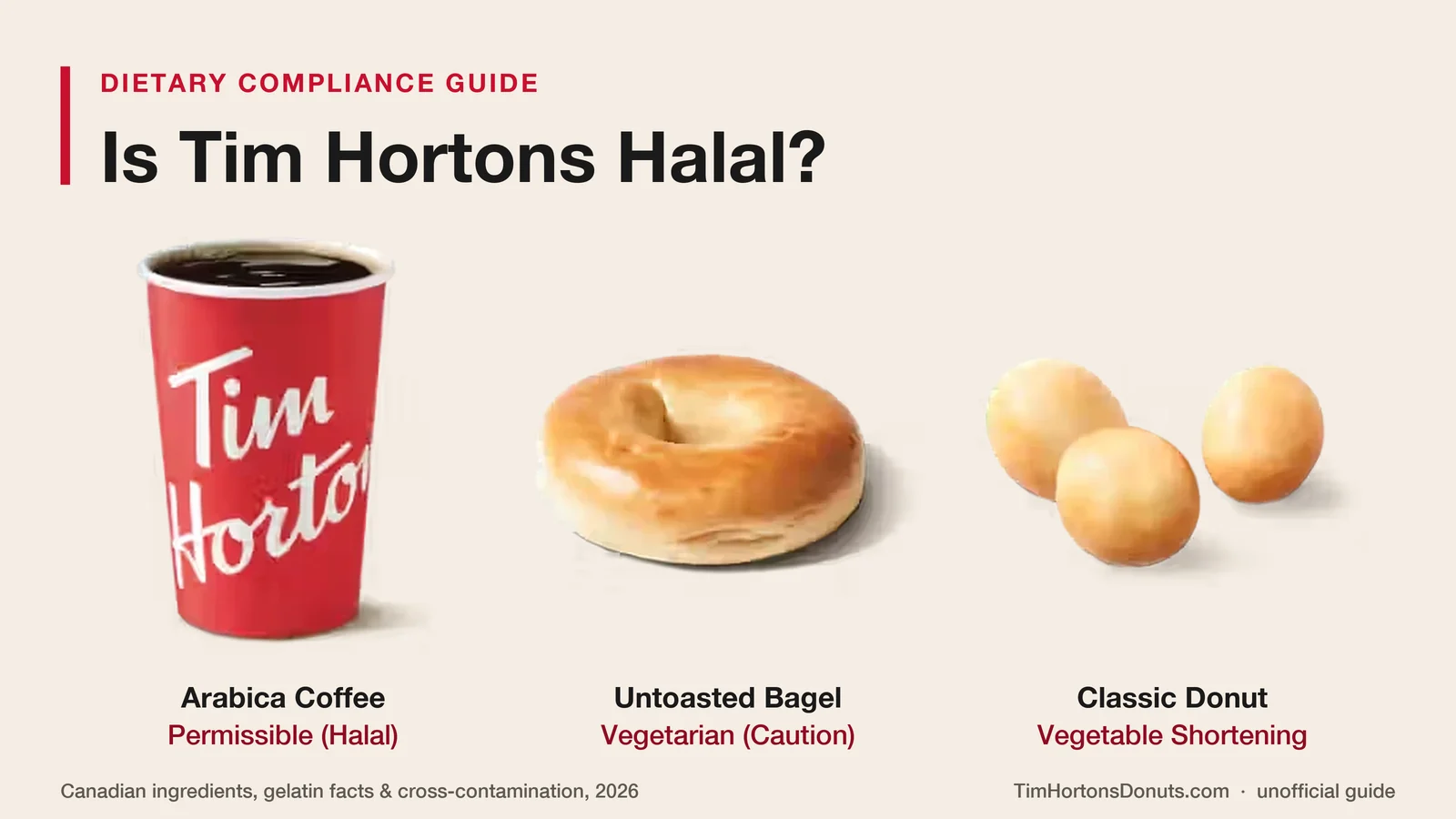
Tim Hortons restaurants in Canada are not halal-certified, and their standard beef, chicken, sausage, and bacon meats are not halal. While 100% Arabica coffee, steeped teas, and select vegetarian baked goods contain no animal products, strict halal consumers should be aware of kitchen cross-contamination on shared toasters and preparation counters.
Does Tim Hortons Have Halal Certification in Canada?
Tim Hortons operates over 3,500 restaurant locations across Canada, but none of these domestic branches possess chain-wide halal certification. The brand operates as a mainstream quick-service restaurant chain designed to serve the broader Canadian public without third-party religious supervision.
Official Chain-Wide Policy on Halal Certification
The corporate management of Tim Hortons does not claim or advertise halal status for any Canadian operations. While food products meet stringent standards established by the Canadian Food Inspection Agency (CFIA), restaurants are not certified by recognized Islamic certifying bodies such as the Halal Monitoring Authority (HMA) or the Islamic Food and Nutrition Council of Canada (IFANCC).
Consequently, no individual Canadian location can be considered fully halal-compliant from an operational standpoint. Customers adhering to religious dietary guidelines must evaluate individual menu ingredients and kitchen preparation practices independently.
Domestic Canadian Stores vs International Middle East Locations
There is frequent consumer confusion regarding Tim Hortons' global halal policies. In international markets—specifically across the Middle East in the United Arab Emirates, Saudi Arabia, Qatar, Bahrain, Kuwait, and Oman—all Tim Hortons restaurants are 100% halal-certified, with all poultry and beef sourced from certified abattoirs.
Furthermore, select international locations in the United Kingdom feature certified halal chicken. However, this policy does not apply to North America. Domestic Canadian restaurants operate through entirely separate regional supply chains that do not utilize halal-certified slaughter processes.
Are Tim Hortons Meats Halal? (Chicken, Beef & Breakfast Sausage)
All poultry, beef, and pork items served at Canadian Tim Hortons locations are non-halal. Individuals seeking strictly halal-compliant meats must avoid all standard protein offerings.
Chicken Strips and Slow-Cooked Chicken
The chicken utilized in wraps, loaded bowls, and artisan sandwiches is sourced from commercial Canadian poultry processors that do not perform ritual Islamic slaughter (Zabihah).
Because the chickens are mechanically processed without religious blessing or hand slaughter, they do not meet halal requirements. This restriction applies equally to crispy breaded chicken tenders, grilled chicken strips, and seasoned shredded slow-cooked chicken.
Breakfast Sausage Patties and Bacon
Pork represents an absolute religious prohibition (haram) in Islamic dietary law. Tim Hortons serves substantial volumes of pork products daily, primarily consisting of pork breakfast sausage patties, smoked bacon strips, and Canadian peameal bacon.
The standard breakfast sausage served on biscuits and English muffins is made from ground pork trimmings, herbs, and spices. Similarly, the steak patties featured on lunch sandwiches are commercial beef cuts that lack halal slaughter certification.
Do Tim Hortons Donuts and Timbits Contain Animal Gelatin?
For many Muslim diners, baked goods represent a desirable alternative to meat dishes. Understanding the sourcing of fats, emulsifiers, and gelling agents is critical when ordering donuts and Timbits.
Vegetable Shortenings and Plant-Based Emulsifiers
Tim Hortons baked goods are fried in 100% vegetable shortening, primarily non-hydrogenated palm and canola oil blends. The chain phased out animal-derived lard and beef tallow from its standard frying vats decades ago.
Furthermore, the common dough conditioners, mono- and diglycerides, and sodium stearoyl lactylate used in core yeast and cake donuts (such as Honey Dip, Chocolate Glazed, and Boston Cream) are plant-derived vegetable emulsifiers. Therefore, the core dough bases do not contain hidden pork lard.
Marshmallow Toppings, Dream Cookies, and Jelly Fillings
While basic doughs are vegetarian, certain specialty glazes, seasonal toppings, and dream pastries introduce animal-derived ingredients:
- Marshmallow Confections: Marshmallow toppings featured on S'mores dream cookies, hot chocolates, or holiday donuts contain porcine (pork-derived) or bovine (beef-derived) gelatin. Because this gelatin is not halal-certified, these items must be avoided.
- Fruit Fillings: Most fruit jellies (such as strawberry and raspberry Timbits) are thickened with plant-derived fruit pectin rather than animal gelatin, making them permissible for most diners.
- Custards and Creams: The Venetian cream filling in Boston Cream donuts utilizes modified cornstarch and dairy thickeners rather than animal gelatin.
Cross-Contamination Risks in Tim Hortons Kitchens
Even when an item contains inherently permissible ingredients, cross-contamination in busy kitchen environments poses a significant challenge for strict halal compliance.
Shared Conveyor Toasters and Prep Counters
Most Canadian Tim Hortons locations use high-speed commercial conveyor toasters to toast bagels, English muffins, and sandwich buns.
During breakfast and lunch rushes, buns that have touched hot bacon grease or melted cheese may pass through the same toaster chambers as plain bagels. Furthermore, sandwich assembly lines feature shared preparation counters where sandwich paper, knives, and food-handling gloves frequently come into contact with pork bacon strips.
Egg and Cheese Sandwiches Prepared on Meat Grills
Meatless breakfast sandwiches—such as an egg and cheese on an English muffin—appear halal-friendly at first glance. However, freshly cracked eggs are cooked on commercial flat-top grills or in egg-steaming rings directly adjacent to pork sausage patties.
Cooking spatulas, warming trays, and assembly boards are routinely shared between meat-topped and meatless orders. Unless an employee uses a thoroughly cleaned utensil and fresh disposable gloves upon request, microscopic cross-contamination with bacon grease is practically inevitable.
Muslim-Friendly Food and Beverage Matrix at Tim Hortons
To help Muslim consumers navigate the Canadian menu safely, the following matrix classifies menu items by their degree of compliance and cross-contamination risk.
| Menu Category | Typical Items | Halal Compliance Status | Notes & Sourcing Details |
|---|---|---|---|
| Hot Coffee & Teas | Original Blend, Dark Roast, Steeped Tea, Earl Grey | Permissible (Halal) | 100% plant-based Arabica coffee beans and dried whole-leaf teas. Completely animal-free. |
| Cold Beverages | Iced Capp, Iced Coffee, Fruit Quenchers | Permissible (Halal) | Standard dairy, natural coffee extracts, and fruit concentrates. Zero animal fats. |
| Plain Bakery Items | Honey Dip, Apple Fritter, Classic Glazed Donuts | Permissible (Vegetarian) | Fried in vegetable oil; uses plant-based mono- and diglycerides. No animal lard. |
| Untoasted Bagels | Plain, 12-Grain, Everything Bagel with Cream Cheese | Low Risk (Permissible) | Safe if requested untoasted or sliced with a clean knife to avoid toaster crumbs. |
| Specialty Marshmallow Treats | S'mores Donuts, Dream Cookies with Marshmallows | Questionable / Caution | Frequently contain animal-derived gelatin stabilizers that are not halal. |
| Meatless Breakfast Sandwiches | Egg & Cheese Biscuit, Simply Egg Muffin | Medium Risk (Cross-Contamination) | Ingredients are vegetarian, but prepared on surfaces shared with pork bacon. |
| All Poultry Items | Crispy Chicken, Slow-Cooked Chicken Wraps | Non-Halal (Haram) | Sourced from standard commercial poultry processors without halal slaughter. |
| All Pork & Beef Meats | Breakfast Sausage, Bacon, Peameal, Steak Sandwiches | Strictly Prohibited (Haram) | Pork is strictly haram; beef cuts lack halal certification. |
Safest Ordering Strategies for Muslim Customers at Tim Hortons
Muslim diners who choose to frequent Canadian Tim Hortons restaurants can minimize cross-contamination and ingredient risks by adopting these practical ordering protocols:
- Prioritize the Hot and Cold Beverage Menu: All freshly brewed Arabica coffees, espresso lattes, hot specialty teas, and classic Iced Capps are 100% plant-based and dairy-safe, making them the most risk-free menu choices.
- Request Untoasted Bagels or Fresh Tongs: When ordering a plain or sesame seed bagel with cream cheese, ask the team member to leave the bagel untoasted to avoid the shared conveyor toaster. You can also politely request that they use a clean knife or spatula when spreading butter or cream cheese.
- Stick to Core Classic Pastries: Select traditional yeast-raised and cake donuts like Honey Dip, Chocolate Glazed, or Old Fashioned Plain, while steering clear of novelty holiday items decorated with gummy candies, marshmallows, or multi-layered dessert glazes.
- Avoid Meatless Sandwiches During Peak Rushes: If you order an egg and cheese sandwich, request that the egg be prepared using a clean pan or disposable utensils. During peak morning drive-thru hours, however, kitchen adherence to special cross-contamination requests cannot be guaranteed.
Frequently Asked Questions
Is Tim Hortons chicken halal in Canada?
No, the chicken served at Tim Hortons locations in Canada is not halal-certified. The poultry is sourced from mainstream commercial processors that do not practice religious Islamic slaughter (Zabihah).
Does Tim Hortons have halal food in Canada?
While Tim Hortons Canada has no chain-wide halal certification, many vegetarian and beverage items are permissible for Muslims to consume. These include brewed Arabica coffee, specialty teas, cold beverages, and vegetarian donuts made without animal gelatin.
Are Tim Hortons donuts fried in pork lard?
No, Tim Hortons donuts are fried exclusively in 100% vegetable shortening made from blends of palm and canola oils. Animal-derived lard and beef tallow are not used in frying standard donuts or Timbits.
Do Tim Hortons donuts contain gelatin?
Standard yeast and cake donuts (such as Honey Dip and Boston Cream) do not contain gelatin. However, select specialty pastries, dream cookies topped with marshmallows, and seasonal novelty items contain animal-derived gelatin that is not halal.
Can Muslims eat the egg and cheese breakfast sandwich at Tim Hortons?
The ingredients of an egg and cheese sandwich (egg, cheese, English muffin) are vegetarian, but they are prepared on shared cooking surfaces where pork sausage and bacon are cooked. Strict halal observers generally avoid them due to cross-contamination risks.
Are Tim Hortons bagels halal?
The ingredients in standard Tim Hortons bagels (plain, sesame seed, everything, 12-grain) are halal-friendly and plant-based. However, toasters are shared with items that may carry bacon grease, so requesting your bagel untoasted is recommended for strict compliance.
Is the vanilla syrup or French Vanilla halal at Tim Hortons?
Yes, the vanilla syrup and French Vanilla powder used at Tim Hortons do not contain alcohol or animal-derived ingredients. They are classified as permissible vegetarian beverages.
Are Tim Hortons restaurants in the Middle East halal?
Yes, all Tim Hortons restaurants located in the Middle East (including Dubai, Saudi Arabia, Qatar, and Kuwait) are 100% halal-certified, with all meats sourced from certified Islamic suppliers.
Does Tim Hortons fish or tuna have halal certification?
While Tim Hortons has occasionally offered tuna salad sandwiches in select Canadian markets, the fish itself is naturally permissible (halal), but the preparation on shared counters introduces potential contact with non-halal sandwich ingredients.
What is the safest item for a Muslim to order at Tim Hortons?
The safest items are hot brewed coffee, steeped tea, specialty espresso drinks, iced coffee, and factory-packaged items like plain oatmeal. These items have zero risk of contact with pork or non-halal meat.
This is an independent dietary and ingredient analysis not affiliated with Tim Hortons or Restaurant Brands International. Halal dietary assessment is based on public supplier and ingredient declarations. See Sources.